Merchandise Project Brief Checklist
Goal • audience • quantity • budget • date • destination • branding • packaging • sustainability • approvals
View Checklist
INSIGHTS FOR B2B MERCHANDISE PROJECTS
Practical guidance for corporate gifting and branded merchandise — from budget, quantity, and lead time to product selection, customization, packaging, sustainability, and delivery planning.
For companies, teams, agencies, procurement, HR, marketing, and event programs — not consumer shopping.
START WITH THE QUESTION
Choose the question closest to your project. We’ll take you to the most useful guide, tool, or solution.
FEATURED BUYER GUIDES
These guides are built around common procurement questions — not trend reporting.
Budget & Procurement
Understand the stages and decisions that affect timing.
Read Guide
Gifting Strategy
Start with your audience, purpose, and priorities.
Read Guide
Sustainability & Certifications
Understand what evidence applies to your selected project.
Read GuidePLANNING TOOLS
Use these simple tools to organize the project before product selection begins.
Goal • audience • quantity • budget • date • destination • branding • packaging • sustainability • approvals
View ChecklistWork backward from the event date across product selection, artwork, sample, production, packing, and delivery.
View TimelineSeparate product, branding, packaging, personalization, and delivery decisions so the budget can be prioritized intentionally.
View Budget FrameworkClarify which material, certification, packaging, testing, or compliance information the project actually needs.
View Evidence ChecklistLEARN BY BUSINESS GOAL
Employee Experience
Welcome kits • recognition • remote onboarding • recurring programs
Plan useful kits around quantity, budget, repeatability, personalization, and delivery.
Explore Employee Guides
Client & Partner Gifting
Client appreciation • strategic accounts • VIP gifting • tiered programs
Plan relationship gifts around recipient tier, budget, gifting policy, personalization, and delivery.
Explore Client Gifting Guides
Events & Campaigns
Conferences • launches • activations • corporate events
Plan backward from the event date across volume, branding, approvals, pack-out, and venue delivery.
Explore Event Guides
Sustainable Programs
Materials • packaging • documentation • claims
Understand responsible options, evidence, trade-offs, and what applies to the selected product.
Explore Sustainability Guides
Custom Brand Projects
Product development • packaging • special requirements
Understand when customization is simple, when it becomes development, and what changes cost / MOQ / timeline.
Explore Custom Project Guides
BROWSE BY DECISION
Choose gifts for your business goals.
What Belongs in an Employee Welcome Kit?Client Appreciation Gifts: A Practical Selection GuideView All GuidesPlan costs, quantities, and timelines.
Build a Realistic Corporate Gifting BudgetPrepare Your Merchandise Project BriefView All GuidesCompare materials and everyday use.
Cotton, Recycled Cotton, or rPET: Comparing Tote DirectionsView All GuidesExplore logo and packaging options.
Printing, Embroidery, or Laser Engraving: How to ChooseView All GuidesUnderstand claims and evidence.
FSC, GRS, RCS, and OEKO-TEX: What Buyers Should CheckView All GuidesExplore our approach to your project.
Prepare Your Merchandise Project BriefView All GuidesMATERIALS & EVIDENCE
Responsible material choices are most useful when buyers understand what the material is, what evidence applies, and what trade-offs the project may involve.
What recycled content means, what supplier / certification evidence may be available, and how it can affect color, finish, cost or MOQ.
When FSC can be claimed, which product / packaging components may be covered, and why chain-of-custody scope matters.
Typical uses, decoration compatibility, evidence types, and sourcing considerations.
Plastic-reduced, recyclable, reusable, right-sized, and paper-based packaging — what each claim should and should not imply.
Why useful, durable products can be part of a responsible gifting strategy even when the material story is not the only sustainability factor.
SEE THE GUIDANCE APPLIED
Use concept programs to see how audience, quantity, budget, branding, packaging, sustainability, and delivery decisions work together in a B2B project.
CONCEPT PROGRAMEMPLOYEE EXPERIENCE
Practical branded essentials, a personal welcome message, and repeatable packaging.
View Concept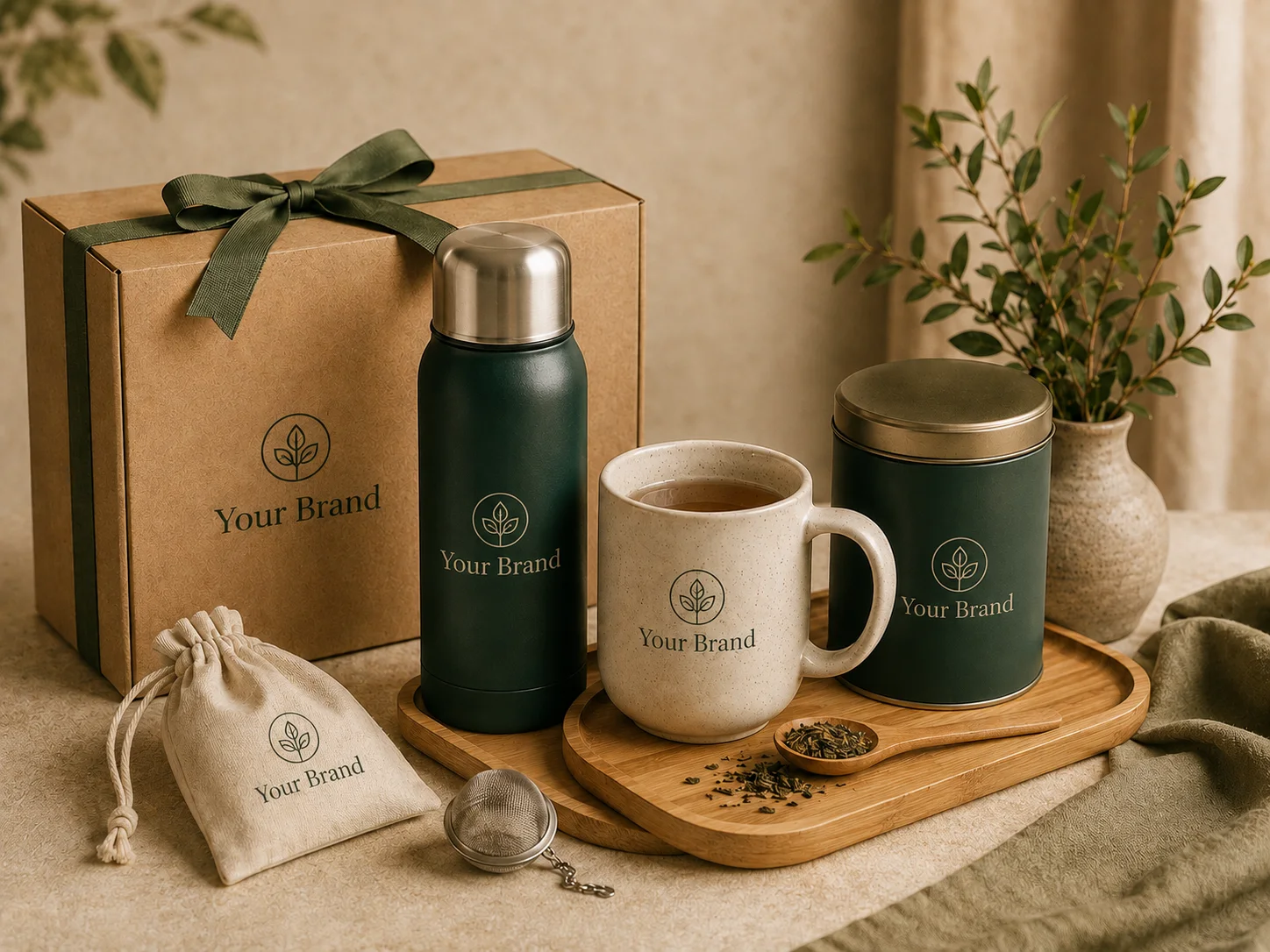 CONCEPT PROGRAM
CLIENT & PARTNER GIFTING
A focused mix of useful items, refined presentation, and a personal message.
View Concept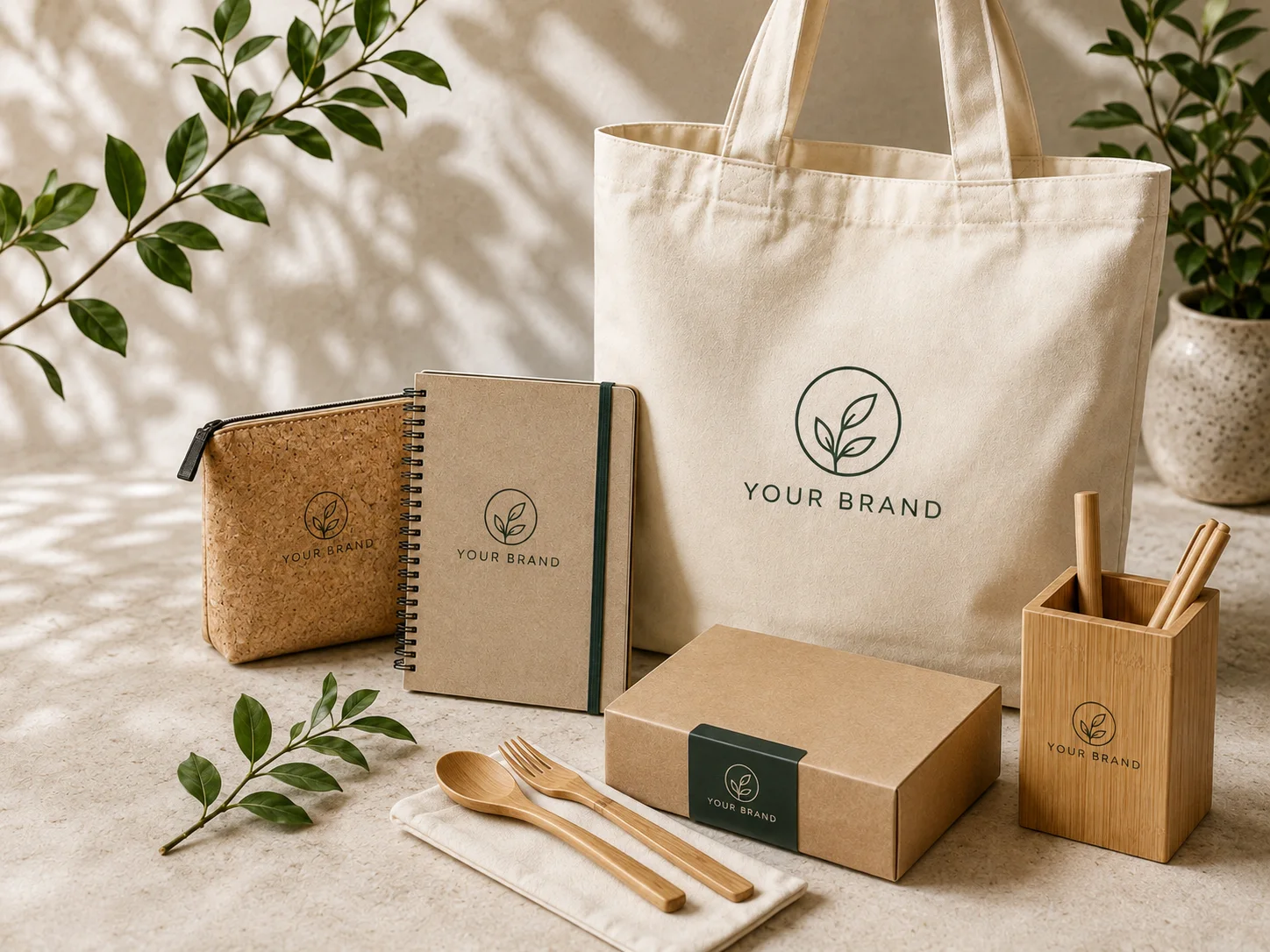 CONCEPT PROGRAM
EVENTS & CAMPAIGNS
Event-ready merchandise, audience segmentation, and coordinated messaging.
View ConceptIllustrative planning examples; specifications are reviewed for each live project.
HOW WE BUILD THE GUIDANCE
Our goal is not to publish trend content for its own sake. The most useful guidance comes from product, supplier, branding, packaging, quality, documentation, and delivery realities.
Product availability, materials, decoration methods, MOQ and supplier capability inform the guidance.
Digital mockups, samples, packaging prototypes, and approval workflows help reveal what works in practice.
Specifications, decoration quality, packing, consistency and inspection requirements shape realistic recommendations.
Material, certification, testing and compliance information is used only where it applies to the selected product / supplier / market.
Dimensions, destination, event timing, multi-location needs and shipment restrictions are part of project planning.
LATEST INSIGHTS
Prioritize practical updates, new procurement questions, material / packaging developments, and lessons that help buyers plan better.

Products & Materials
Compare composition, everyday use, and documentation.
Read GuideSustainability & Certifications
Understand what evidence applies to your selected project.
Read Guide
Branding & Packaging
Match the branding method to the product and design.
Read GuideNOT SURE WHERE TO START?
Start with the Project Brief Checklist and the Product Selection guide. Define the audience, quantity, budget, needed-by date, destination, and project goal before comparing individual items.
Start with lead time, artwork approval, sample route, production, pack-out, delivery window, and contingency planning. Product preference should come after feasibility.
Start with material priorities, packaging reduction, product durability, and the evidence your internal team actually needs. Then validate which claims apply to the selected items.
If quantity, date, destination, and budget are already known, submit the Project Brief. We can recommend a route directly rather than making you read more content first.
READY TO APPLY THE GUIDANCE?
Share the project type, quantity, target date, budget, destination, branding, sustainability, or delivery requirement. We’ll recommend the next practical route.
Start with the goal, audience, quantity, timing, and destination. We can help refine the products.
FROM RESEARCH TO A WORKABLE PROJECT
If you already know the audience, quantity, budget, date, or destination, share the project basics. We’ll help narrow the product, branding, packaging, sustainability, and delivery direction.