THE STARTING POINT
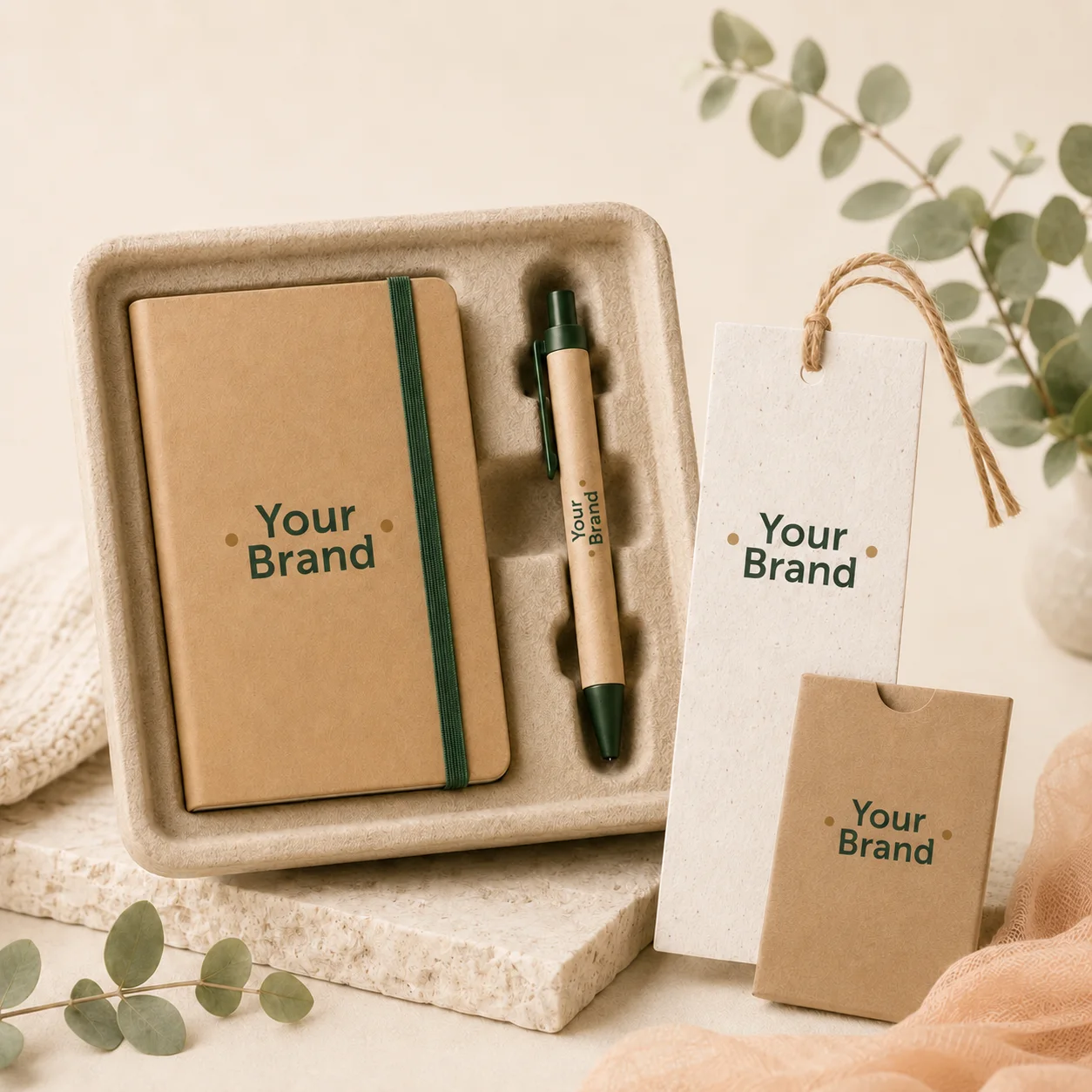
A welcome kit should help a new colleague feel prepared, included, and connected. Define where the kit fits in onboarding: before the first day, at the office, or as part of a remote welcome. This context is more useful than starting with a long product list.
Start With the First-Day Experience
A welcome kit should help a new colleague feel prepared, included, and connected. Define where the kit fits in onboarding: before the first day, at the office, or as part of a remote welcome. This context is more useful than starting with a long product list.
Choose a Small Set of Useful Essentials
A notebook, reusable bottle, and carry bag are common starting directions. Select items around how your team actually works. Remote staff may value compact desk essentials, while travelling colleagues may prefer a pouch or portable carry solution.
Add the Human Details
A welcome message, team introduction, or personal note gives the kit meaning. Keep the branding consistent across products and packaging, and leave room for the recipient rather than putting a large logo on every surface.
Plan for Repeatability
Review quantity, storage, replenishment, artwork, packaging, and destination. A recurring onboarding program benefits from a clear specification and an agreed route for future batches.
Turn the Direction Into a Brief
Share recipient type, estimated quantity, per-recipient budget, needed-by date, delivery locations, and branding priorities. The final product mix can then be reviewed around what the project can support.
What to Share in Your Brief
- Business goal and recipient type
- Estimated quantity and budget
- Needed-by date and delivery locations
- Branding, packaging, and evidence priorities